
Dog Probiotics & Digestive Supplements
Probiotic-powered digestive support for sensitive tummies, loose stools, and long-term gut balance.
1 product
When to reach for digestive support
The obvious moment is when something is already wrong — soft stools, wind, a grumbly tummy, a dog going off their food. But the more useful moments are the predictable ones, where you can get ahead of the upset rather than chase it.
Food transitions are the classic example: switching your dog's food over 7–10 days is far smoother with digestive support running throughout. The same goes for the week after a course of antibiotics, for travel and kennel stays, and for any dog whose digestion has simply always been sensitive.
Prebiotics, probiotics, postbiotics — the actual difference
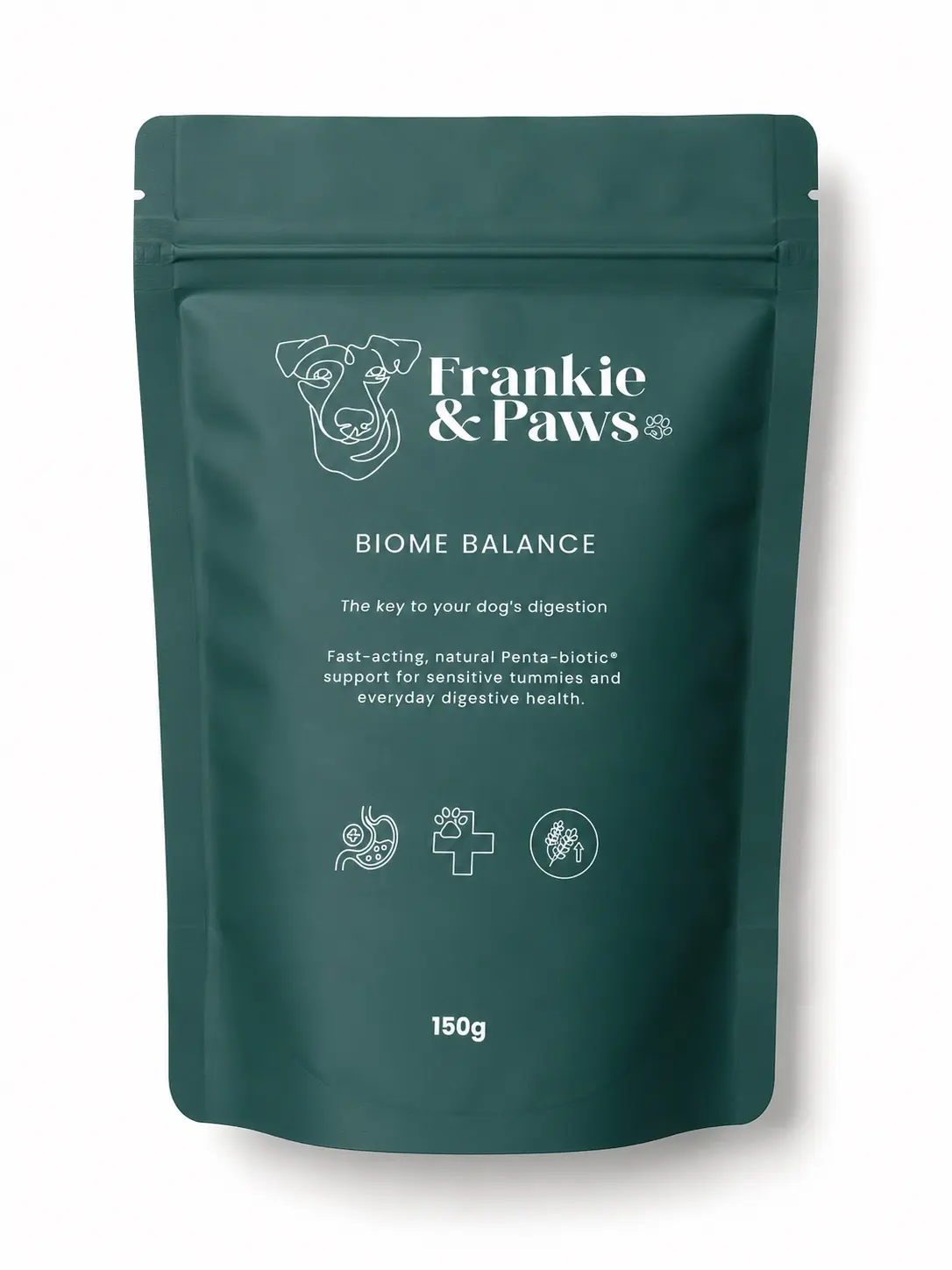
Probiotics are the live beneficial bacteria themselves. Prebiotics are the fibres that feed them. Postbiotics are the useful compounds those bacteria produce. Most products on the shelf do one of the three; doing all of them together is the point of our Penta-biotic® blend in Biome Balance.
One detail worth caring about is which probiotic strains a product uses. Biome Balance uses Bacillus subtilis C-3102 and Bacillus velezensis DSM 15544 — spore-forming bacteria that survive stomach acid and reach the gut intact, where more fragile strains such as Lactobacillus often don't. Each serving delivers over 525 million live cultures, alongside pumpkin fibre for stool quality and beta-glucans as prebiotic fuel.
Daily maintenance, or a higher dose during an upset
Biome Balance has two serving levels, and using the right one matters more than most people expect.
- Daily maintenance: the standard serving, once a day with the main meal, for ongoing gut and immune support.
- During an upset: the higher serving at the first sign of soft stools or a grumbly tummy — continue for 3–5 days until things settle, then drop back.
- After antibiotics: the higher serving for 7–10 days to help restore gut flora.
- Through a food change: the maintenance serving across the whole 7–10 day transition.
- Off their food? Dissolve it in the water bowl instead — they still get the support.
Do dogs actually need probiotics?
Not every dog needs one, but many benefit. A dog with consistently firm stools and no digestive trouble is doing fine on their food alone. Probiotics earn their place where digestion is sensitive, where the diet is changing, after antibiotics, or through stressful periods like travel and kennel stays — the moments when the gut microbiome gets disrupted.
What should I look for in a dog probiotic?
Look at the strains and whether they survive the journey. Spore-forming Bacillus strains reach the gut intact where many common probiotic bacteria are destroyed by stomach acid. Beyond that, check there is a stated live-culture count, that prebiotic fibre is included to actually feed the bacteria, and that the serving is scaled to your dog's weight.
How long do probiotics take to work in dogs?
For an acute upset, the higher serving typically settles things over 3–5 days. For general gut health, give it daily and think in terms of weeks rather than days — a stable microbiome is built through consistency. If loose stools persist beyond a few days, that's a vet conversation rather than a supplement one.
Can I give my dog probiotics after antibiotics?
Yes, and it's one of the best times to. Use the higher serving for 7–10 days afterwards to help restore gut flora. One important exception: do not give Biome Balance at the same time as macrolide-type antibiotics such as erythromycin or azithromycin — this is printed on the pouch. If your dog is on any medication, check with your vet.
Are probiotics safe for dogs long term?
Biome Balance is designed for consistent, everyday use and is gluten-free and suitable for sensitive stomachs. It works best given daily rather than only when there's a problem. See your vet promptly for persistent diarrhoea, blood in the stool, or a dog refusing food for more than 24 hours — a supplement supports digestive health but doesn't replace veterinary care.