
Joint Supplements for Dogs
Joint and mobility supplements for ageing dogs, active dogs, and breeds prone to stiffness.
1 product
What changes in an ageing dog's joints
Two things tend to happen at once. Joints that have carried a dog for years accumulate wear in the cartilage that cushions them, which is what produces the familiar stiffness after rest or a hard walk. At the same time the body's own production of collagen — the structural protein behind cartilage, tendons, skin and coat — naturally tapers with age.
Less collagen means less of the scaffolding that keeps joints comfortable and coats glossy. It usually shows up first as small things: a slower climb up the stairs, a slightly duller coat, a longer warm-up on a cold morning. None of it is alarming on its own, but it's the point at which an older body could use more support.
What to look for in a joint supplement
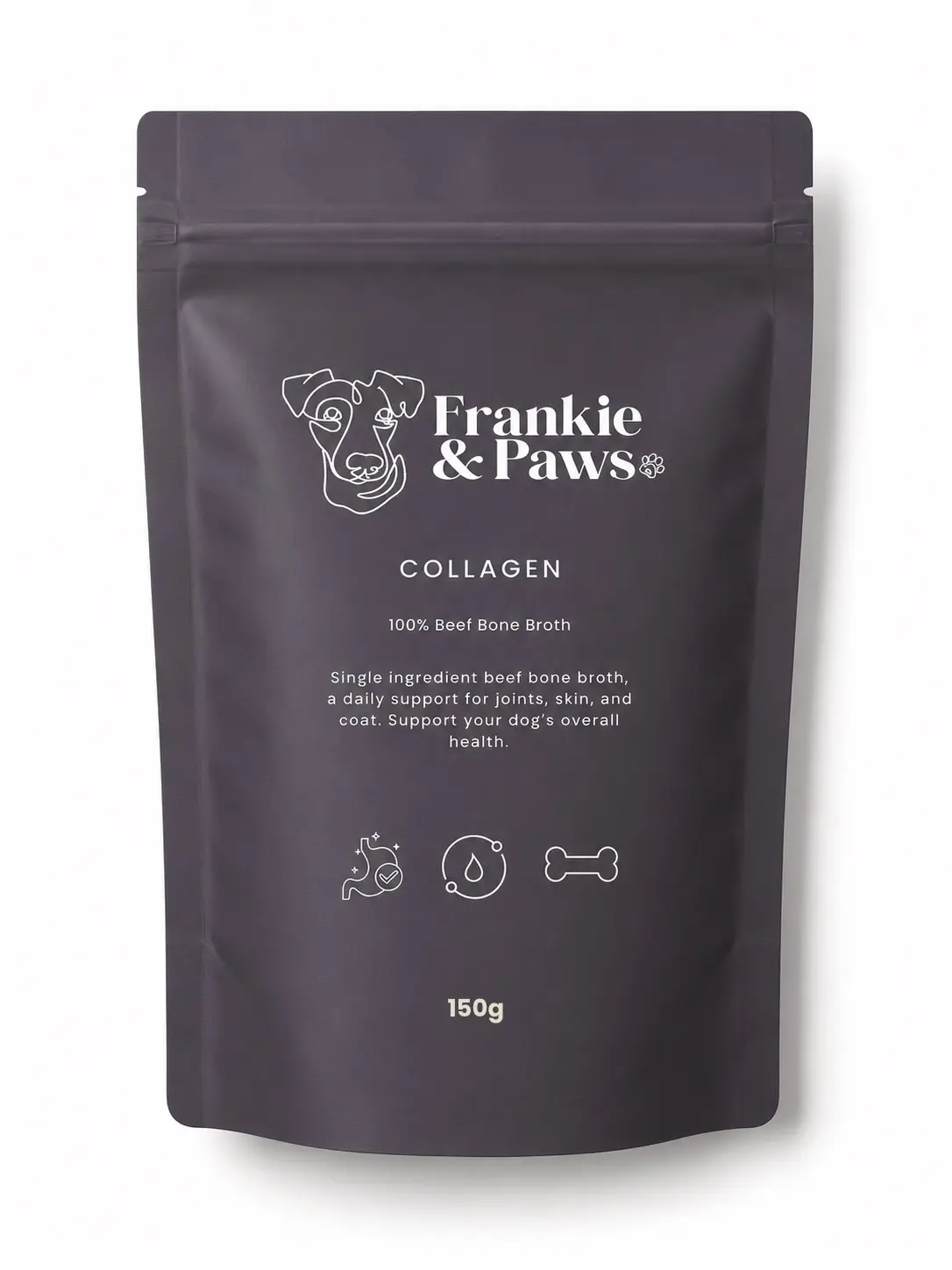
Source and quality matter more here than in most categories, because with collagen the protein is the product. We use grass-fed bovine collagen, chosen for quality and traceability rather than for being the cheapest available option, and dehydrated from beef bone broth into a single-ingredient powder — 99% crude protein, nothing else added.
Palatability is the other thing worth weighing, and it's underrated. Older dogs get fussier about change, and the best-formulated supplement in the world does nothing in a bowl the dog walks away from. A broth-based powder tends to be the easiest sell, and it doubles as a hydration boost after exercise or on hot days.
How long joint supplements take to work
Longer than most owners expect, and that's worth knowing up front. Connective tissue turns over slowly, so collagen is a play-the-long-game supplement rather than a quick fix.
Coat condition is usually the first change owners notice, often within 2–3 weeks. Joint comfort and mobility build more gradually — typically over 4–6 weeks of consistent daily use, sometimes longer. The benefit comes from giving it every day rather than occasionally, and from judging it over months rather than days.
When should I start giving my dog a joint supplement?
Earlier than most people do. Because collagen supports connective tissue over time rather than repairing it after the fact, there's an argument for starting before stiffness appears — particularly for large breeds, very active dogs, and dogs entering their senior years. It isn't a supplement that rewards waiting for a problem.
What should I look for in a dog joint supplement?
Check the source, the ingredient list and the serving guidance. Grass-fed bovine collagen is chosen for quality and traceability; a short ingredient list tells you exactly what's going in the bowl; and servings should scale by weight rather than being one-size-fits-all. Palatability matters too, since older dogs can be particular about anything new in their food.
How long do joint supplements take to work in dogs?
Allow several weeks. Coat condition often improves first, within about 2–3 weeks, while joint comfort and mobility build more gradually over 4–6 weeks of consistent daily use. Connective tissue turns over slowly, so give it daily and assess it over months rather than days.
Can joint supplements help a dog with arthritis?
A joint supplement is not a treatment for arthritis, and shouldn't be used as one. Collagen supports healthy joints, skin and coat over time as part of a balanced diet. Sudden lameness, obvious pain, swelling, or a dog reluctant to put weight on a limb needs a vet who can diagnose what's actually happening and prescribe treatment where it's needed.
Is collagen good for more than just joints?
Yes. Collagen is the main building block of connective tissue throughout the body, so the same powder supports skin and coat condition and the gut lining alongside joints. That's why coat shine is usually the first visible change — it's simply the fastest-turning-over tissue of the three.