Back-to-School Blues: Helping Your Dog With Separation Anxiety After Summer
27 September 2026•Natalie•5 min read
For six weeks the house was full. Someone was always home, walks happened whenever anyone felt like one, and your dog barely spent an hour on their own. Then September arrives, the school run starts, everyone goes back to work, and the house goes quiet at 8.30 every morning.
You get used to the new routine within a few days. Your dog might take longer.
Separation anxiety after the summer holidays is common. Dogs rely on routine, and a sudden drop in company, a change in walk times and a quieter house can leave them unsettled. Signs include barking or howling when left, pacing, chewing near doors, toileting indoors, trembling or ignoring food left for them. Most dogs settle with a steady routine and short, calm practice absences. If the signs are severe or don't ease, speak to your vet or a qualified behaviourist.
Why does separation anxiety show up after the summer holidays?
Dogs like to know what's coming next. As the Dogs Trust behaviour team puts it, changes in how and when things happen can leave a dog "feeling unsettled, anxious and in need of comfort."
The end of the school holidays changes almost everything at once:
- Company. They go from almost never being alone to several hours alone at a time.
- Timing. Walks, meals and play move to fit the school run and working hours.
- Attention. Children who were around all summer suddenly aren't.
- Energy in the house. Busy, rushed mornings followed by long, quiet stretches.
It's more common than many owners realise. The RSPCA says research suggests 8 out of 10 dogs find it hard to cope when left alone, and that half of them won't show any obvious signs.
What are the signs of separation anxiety in dogs?
Some signs are hard to miss. Others only happen once the door has closed behind you. Signs listed by Dogs Trust and the RSPCA include:
- barking, whining, whimpering or howling when left
- pacing or getting restless as you get ready to leave
- positioning themselves between you and the front door
- chewing or scratching furniture, doors and windows, especially near exits
- going to the toilet indoors when they're normally clean
- trembling, panting or drooling
- ignoring food or chews left for them
- being unusually overexcited, or withdrawn, when you come home
Because so many dogs struggle quietly, the RSPCA suggests setting up a camera to see how your dog behaves while you're out. Ten minutes of footage can tell you more than a tidy living room.
How can I help my dog adjust to being left alone again?
You're not trying to fix this in a day. The aim is to make time alone feel normal and predictable again.
A calm-routine checklist for the first few weeks back
- Walk before you leave. A walk and a chance to go to the toilet before you head out helps them settle into a rest.
- Keep departures and returns boring. A calm goodbye and a calm hello. Big emotional exits make leaving feel like an event.
- Practise short absences. Leave for a few minutes, come back, and build up slowly. Stay within what your dog can cope with.
- Give them something to do. A long-lasting chew or a food puzzle gives them a positive job while you're gone.
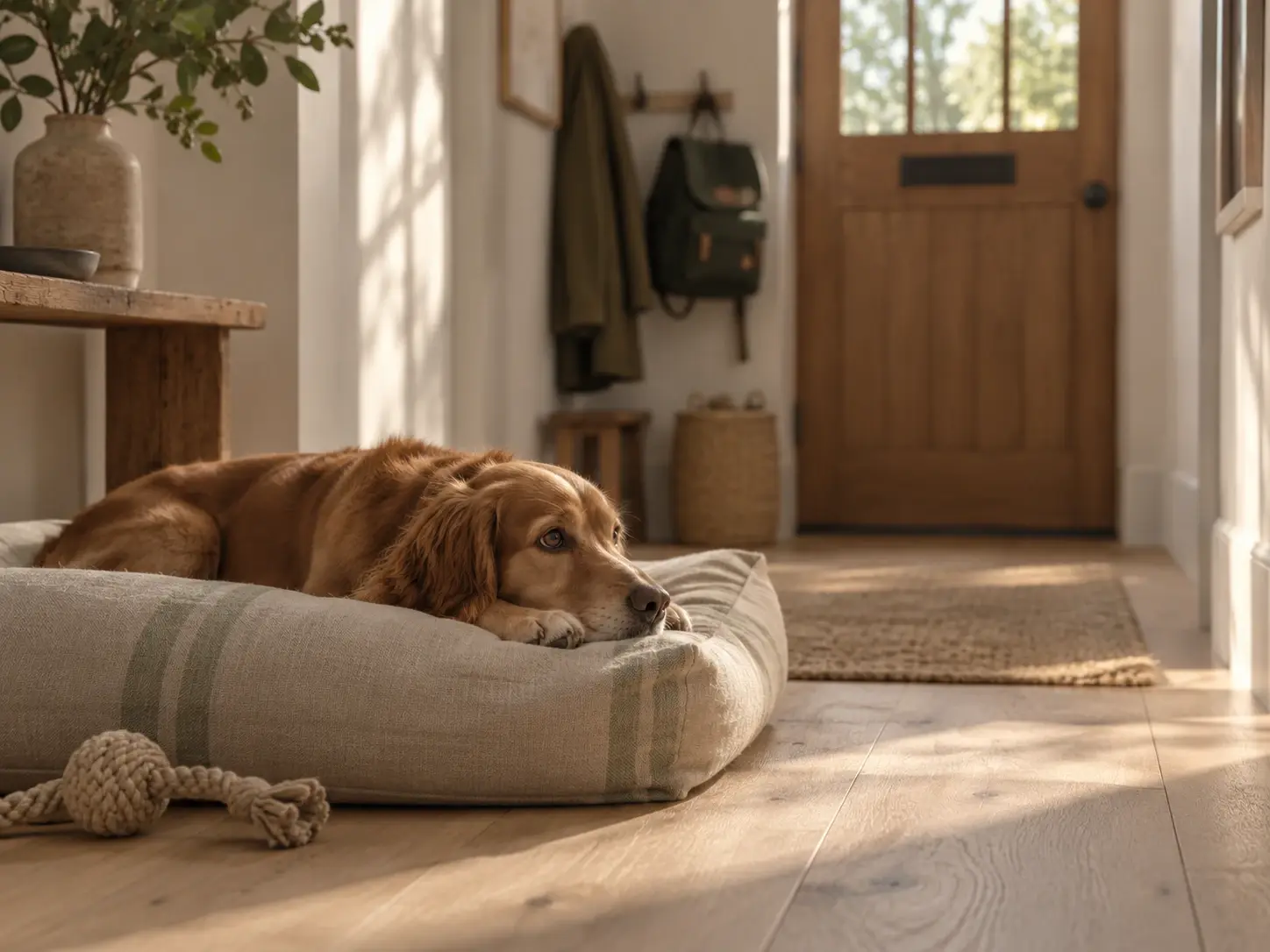
- Create a settled spot. A comfortable bed in a quiet part of the house, away from the front door and busy windows.
- Keep the timings steady. Walks and meals at roughly the same time each day help the new routine make sense quickly.
- Don't leave them too long. The RSPCA recommends no more than four hours alone for an adult dog, and much less for puppies. A friend, dog walker or daycare can bridge longer days.
- Never punish the mess. Coming home to a chewed doorframe is frustrating, but telling your dog off only adds to their anxiety about being left.
If you've been away over the summer as well, the same principle applies as with travel. Change is easier on dogs when the familiar parts of their day stay the same. Our summer travel wellness checklist covers that side of it.
Can a calming supplement help?
A supplement is not a replacement for training or routine, but it can be a useful part of the plan for dogs who find transitions hard.
We created True Calm for everyday nervousness, from travel to separation. It's built around passionflower, with L-tryptophan, taurine and brewer's yeast to support calm, settled behaviour. Starting it a couple of weeks before term begins, or as soon as you notice a change, gives it time to become part of the routine. You can read more about how it works in passionflower and the science of canine calm.
When should I speak to a vet or behaviourist?
Some dogs need more than a gentle reset. Contact your vet or a qualified behaviourist if your dog:
- injures themselves trying to get out, or damages doors and windows
- trembles, pants or drools heavily for long periods
- stops eating or sleeping properly
- isn't improving after a few weeks of a steady routine
Your vet can rule out any medical cause first. Dogs Trust also runs a free Behaviour Support Line on 0303 003 6666.
Sources and further reading
- Dogs Trust — Separation anxiety in dogs: signs, causes and how to help Guidance reviewed by the Dogs Trust behaviour team covering signs, the role of routine changes, and practical training steps.
- RSPCA — Separation anxiety in dogs Advice covering how common separation-related behaviour is, hidden signs, time alone and why punishment makes things worse.
- Dogs Trust — How to help your dog get used to spending time alone Step-by-step guidance on building up time alone gradually.
This article provides general information about dog wellbeing and is not a substitute for veterinary advice. If you are concerned about your dog's behaviour or health, contact your vet.
Frequently asked questions
How long does it take a dog to adjust after the school holidays?
Many dogs settle within a week or two once the new routine is predictable. Dogs who have always found being alone difficult may take longer and benefit from gradual training.
Should I get another dog to keep mine company?
Not as a fix for separation anxiety. The anxiety is usually about being apart from their people, so a second dog doesn't always help and can add new stresses.
Is it OK to leave the radio or TV on?
For some dogs, familiar background noise can mask outside sounds and make the house feel less empty. It works best alongside a steady routine and short practice absences, not on its own.
Join the Frankie & Paws Family
Subscribe to our newsletter for research-led wellbeing guides and key ingredient insights, and enjoy 10% off your first purchase.