Is Halloween Safe for Dogs? Chocolate, Costumes and Trick-or-Treaters
10 October 2026•Natalie•8 min read
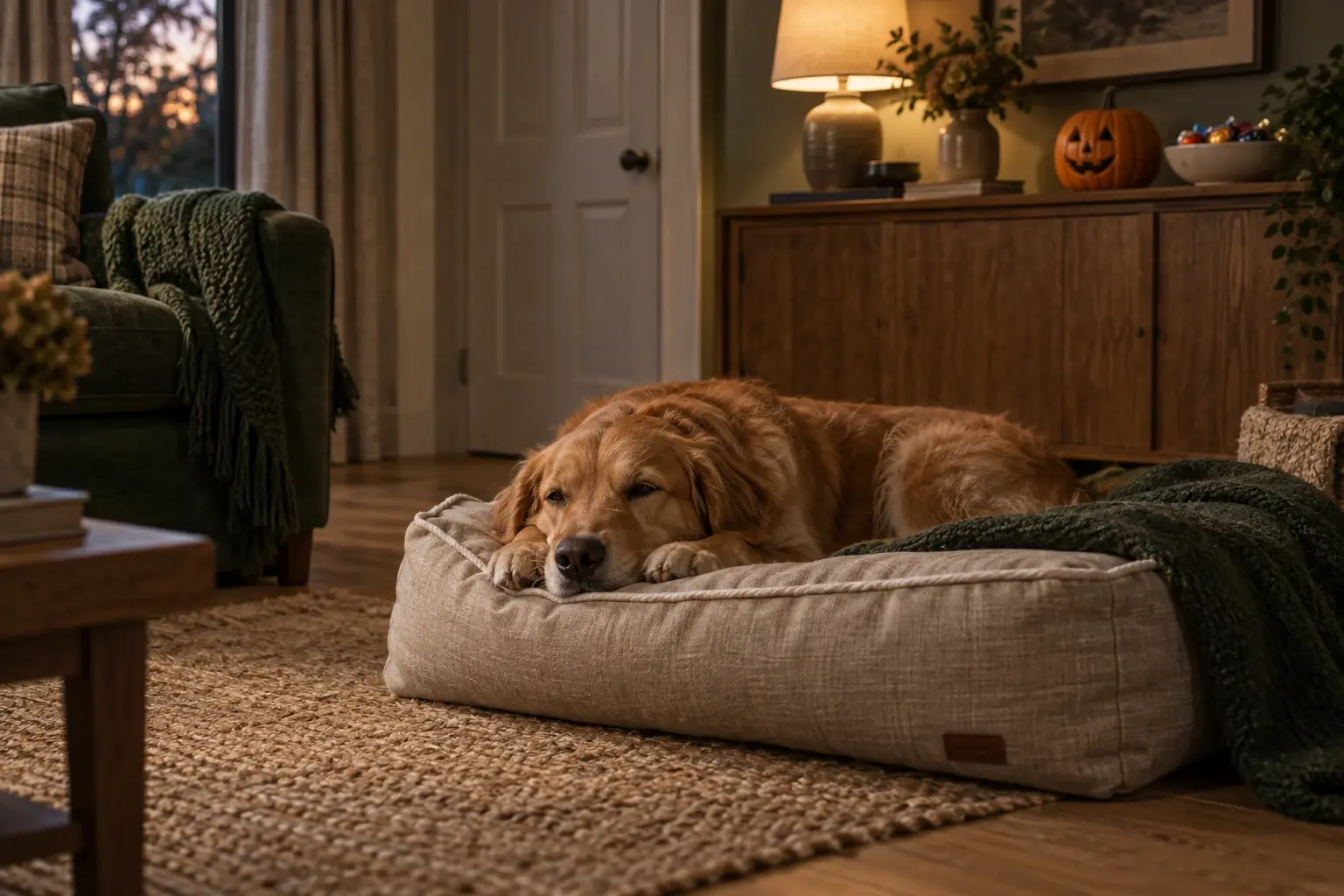
Halloween creeps up on a household. A bowl of sweets by the door, a bag of chocolate in the cupboard, a carved pumpkin on the step. Then, on the night, the doorbell goes every few minutes and the people standing outside don't look much like people.
For most of us it's a fun evening. For a dog, it can be the most confusing night of the autumn.
My dog Evie always seems to know it's coming. She notices when the knocks at the door come more often than usual, and all the extra visitors make her worried. She usually takes herself off to the bedroom and hides under the bed. So now we plan for it, and make sure she has a quiet, safe space to escape to when Halloween gets a little too much.
Halloween can be safe for dogs with a little planning. The real dangers are food: chocolate and sweets containing xylitol (sometimes listed as birch sugar) are toxic to dogs, and raisins can be too. The other risk is stress, from costumes, constant knocking and unfamiliar visitors. Keep all sweets and wrappers out of reach, only use a costume if your dog is genuinely happy wearing one, and settle your dog in a quiet room before trick-or-treating starts. If your dog eats chocolate or anything sugar-free, call your vet straight away.
Can dogs eat chocolate?
No. Chocolate contains theobromine, a stimulant that's harmless to people but which dogs struggle to break down. According to PDSA's vets, how serious it is depends on three things: how much your dog ate, how big they are, and the cocoa content.
- Dark chocolate and cocoa powder are the most dangerous, because they contain the most cocoa solids.
- Milk chocolate is less concentrated but can still be toxic if enough is eaten.
- White chocolate contains no cocoa solids, but the fat and sugar can still cause an upset stomach and, in severe cases, pancreatitis.
Signs usually appear within two to four hours, and can take up to 12. Look out for restlessness or hyperactivity, vomiting, diarrhoea, drinking and weeing more than usual, and tummy pain. Severe cases can cause trembling, a racing heart and seizures.
Don't wait for symptoms. Keep the wrapper, note roughly how much is missing and call your vet.
Is xylitol dangerous for dogs?
Yes, and it's the hazard most owners don't know to look for. Xylitol is a sugar substitute used in sugar-free sweets, chewing gum, mints and some nut butters. It may appear on the label as birch sugar.
In dogs, xylitol triggers a rush of insulin that sends blood sugar plummeting, and it can also cause liver failure. Blue Cross warns that, depending on the dog's size, a single stick of gum can be enough to make a dog critically ill. Symptoms often start within 30 minutes and include vomiting, tiredness, wobbliness, collapse and seizures.
Halloween is an easy time for this to slip through. Sugar-free sweets end up in party bags, and gum ends up in coat pockets and handbags left on the floor.
What other Halloween sweets are risky?
- Raisins. Chocolate-covered raisins and some mixed sweet bags contain them. PDSA notes grapes, raisins, sultanas and currants can cause kidney failure, and there's no known safe amount.
- Wrappers and lolly sticks. A dog who gulps a handful of sweets will often swallow the packaging too, which can cause a blockage.
- Decorations. Dangly decorations can be chewed and swallowed. Hang them out of reach.
- Pumpkins. Keep candle-lit pumpkins where a curious nose can't reach, and throw old carved pumpkins away before they go mouldy.
The simplest rule is that all sweets live in a closed cupboard or high up, including the trick-or-treat haul when it comes home. It's worth telling children why, too.
Should I put a costume on my dog?
It depends on your dog. Lots of owners love dressing their dog up for Halloween, and some dogs are perfectly happy in an outfit. Others find it stressful. Every dog is different, so let yours decide.
It's worth knowing why vets are cautious. PDSA advises against dressing pets up, because a costume can stop a dog doing things they need to do: going to the toilet, grooming themselves, staying at a comfortable temperature, and showing the body language other dogs and people rely on to read them. A dog who can't signal that they're uncomfortable is more likely to end up in a frightening situation.
If your dog is happy to dress up, a few things help keep it fun:
- Keep it simple. A bandana or a light outfit is easier for most dogs than a full costume. Avoid anything that covers their eyes, ears, mouth or tail.
- Check the fit. Nothing tight, nothing that gets in the way of walking or breathing, and no small parts they could chew off and swallow.
- Try it on before the night. Let them sniff it first, then put it on for a few seconds with a treat and build up from there.
- Watch how they react. Freezing, a tucked tail, ears pinned back, lip-licking or trying to wriggle out of it all mean it's not for them. Take it off.
- Keep it short. Take your photos, then take it off, and never leave your dog alone while they're wearing it.
If your dog isn't keen, a themed collar or lead lets them join in without the fuss.
Why is my dog stressed by trick-or-treaters?
From a dog's point of view, Halloween night is a long run of the things they find hardest. The doorbell rings again and again. Strangers appear at the door, often masked, painted or holding something unfamiliar. Children are excited and loud, and there may be fireworks going off in the distance as Bonfire Night approaches.
A dog who barks at the door, paces, hides, pants or won't settle is telling you it's too much. Some signs are quieter, like lip-licking, yawning or turning away.
A calm door-answering routine for Halloween night
- Walk early. Take your dog out for their walk and a toilet break before it gets dark, so you're home before trick-or-treating starts.
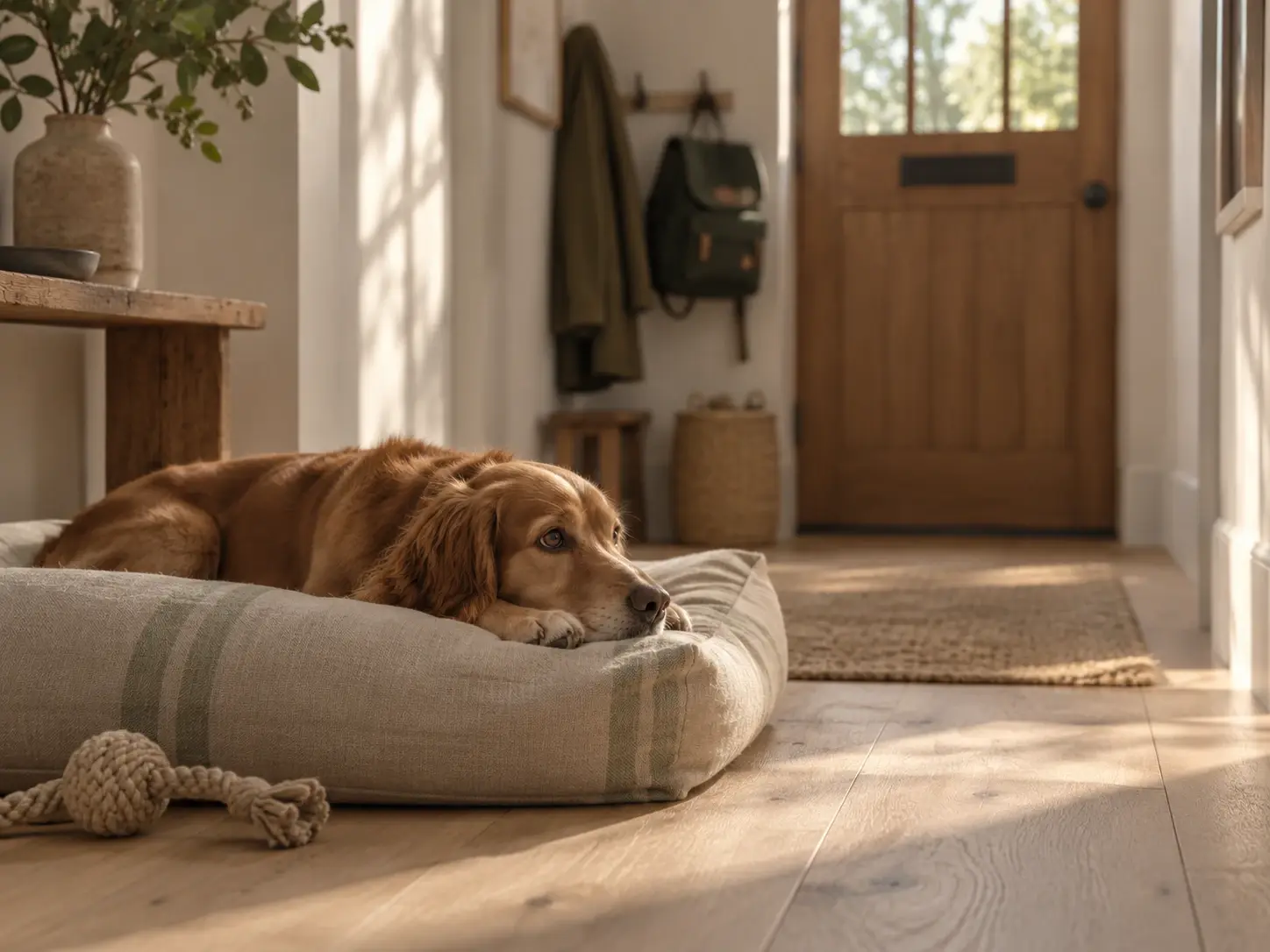
- Set up a quiet room. Choose a room away from the front door, with their bed, water and a long-lasting chew. Close the curtains and put the radio or TV on low. If your dog already has a favourite hiding place, like Evie's spot under the bed, keep it free and let them use it.
- Settle them in before the first knock. It's easier for a dog to relax into a quiet room than to be moved there once they're already wound up.
- Close a door between your dog and the front door. This stops a dash out into the dark and means they never meet a costume face to face.
- Reduce the knocks. PDSA suggests leaving a lidded bucket of sweets outside with a note to help yourself, so fewer visitors need to knock.
- Keep your own responses low-key. Answer the door calmly, and return to your dog in the same easy way. They take cues from you.
- Don't leave an anxious dog alone. If your dog finds the night hard, it's a good evening to stay in with them.
Much of this is the same set-up that helps on fireworks nights, which is useful, because Bonfire Night follows a few days later. For dogs who find evenings like this hard, a calming supplement such as True Calm can support calm behaviour alongside the routine. If you're weighing up calming supplements more generally, our UK buyer's guide to natural dog supplements explains what to look for.
What should I do if my dog eats Halloween sweets?
- Move your dog away from anything left and keep the packaging.
- Work out what they ate, roughly how much, and when.
- Call your vet straight away, or the Animal PoisonLine on 01202 509000, a 24-hour line run by vets that charges per call. Don't wait for symptoms.
- Don't try to make your dog sick at home.
For chocolate, the Vets Now chocolate toxicity calculator gives a quick first read, but it's no substitute for a call to your vet. If the label says sugar-free or contains xylitol or birch sugar, treat it as an emergency.
Sources and further reading
- PDSA — Chocolate poisoning in dogs Written by vets and vet nurses. Covers theobromine, which chocolate is most toxic, symptoms, timings and treatment.
- Blue Cross — Xylitol poisoning in dogs Approved by a veterinary surgeon. Covers where xylitol is found, how it affects dogs and what to do.
- PDSA — Poisons and hazards for your pets A vet-written guide to common household hazards, including xylitol (birch sugar), raisins and chocolate.
- PDSA — How to keep your pets safe and happy this Halloween Advice on costumes, sweets and keeping pets calm on the night.
- PDSA — Halloween survival guide for pets Vet advice on treats, decorations, pumpkins and leaving sweets outside for trick-or-treaters.
This article provides general information about dog wellbeing and is not a substitute for veterinary advice. If you are concerned about your dog's health or behaviour, contact your vet.
Frequently asked questions
How much chocolate is toxic to a dog?
It depends on the dog's size, the amount eaten and the cocoa content. Dark chocolate and cocoa powder are the most dangerous, but milk chocolate can be toxic in larger amounts. There is no safe amount to give, so call your vet as soon as you know your dog has eaten any.
My dog ate one sweet. Should I be worried?
Check the label. If it contains chocolate, xylitol, birch sugar or raisins, or says sugar-free, call your vet straight away. Keep the wrapper so your vet can see exactly what was in it.
Can I give my dog a Halloween treat?
Yes, as long as it's a dog treat rather than anything from the sweet bowl. PDSA recommends keeping treats to no more than 10% of your dog's daily food allowance and reducing their usual food to make room for them.
Is it OK to take my dog trick-or-treating?
Most dogs are happier at home. Busy streets after dark, costumes, fireworks and excited children add up to a lot of stress. Walk your dog before dark instead and settle them in a quiet room for the evening.
Join the Frankie & Paws Family
Subscribe to our newsletter for research-led wellbeing guides and key ingredient insights, and enjoy 10% off your first purchase.