Are Dogs Scared of Fireworks? Signs, Causes and How to Help
27 October 2026•Natalie•8 min read
Fireworks season in the UK isn't one night any more. It starts in late October, peaks around Bonfire Night, comes back for Diwali, and finishes with a bang on New Year's Eve. For people it's a few evenings of fun. For a lot of dogs it's weeks of not knowing when the next bang is coming.
Many dogs are scared of fireworks. In PDSA's Animal Wellbeing (PAW) Report, 41% of UK dog owners said their dog is afraid of them, around 4.1 million dogs. Fireworks are sudden, loud and impossible for a dog to understand or escape. Signs include trembling, panting, pacing, hiding, clinginess and toileting indoors. Prepare a den and a calm routine a few weeks ahead, walk your dog in daylight, keep them indoors once displays begin, stay with them, and speak to your vet early if their fear is severe.
Why are dogs scared of fireworks?
A firework does almost everything a dog finds frightening at once. It's sudden, it's loud, it flashes, and it smells strange. PDSA explains that dogs can't understand they aren't in danger, and because their senses are sharper than ours, they experience fireworks far more intensely than we do.
The unpredictability makes it worse. The Royal Kennel Club points out that with bangs coming from several displays at once, dogs can rarely tell where the noise is coming from. There's no direction to run from and no pattern to get used to.
So if your dog is calm and confident the rest of the year but falls apart in November, they aren't being dramatic. It's a very natural reaction to something that, from their point of view, makes no sense.
Signs your dog is stressed by fireworks
Some dogs make their fear obvious. Others go quiet, and it's easy to miss. Signs listed by PDSA and Dogs Trust include:
- trembling or shaking
- panting, drooling or lip-licking
- pacing and not being able to settle
- barking, whining or crying
- hiding behind or under furniture
- being clingy and staying close to you
- holding their tail down between their legs
- toileting in the house, or chewing things they normally leave alone
- refusing food
- trying to escape
PDSA also notes that some dogs only show small changes from their normal behaviour. If your dog seems a little off on a noisy evening, it's worth taking seriously.
How to prepare your dog for Bonfire Night
The most useful work happens before the first firework. A few weeks is enough to make a real difference to how the season goes.
- Check their microchip details. Scared dogs can bolt. Up-to-date details give you the best chance of getting them back.
- Find out when local displays are. Council and club displays are usually advertised, so you can plan walks and evenings around them.
- Check your house and garden are escape-proof. Look at fences, gates, doors and windows now, not on the night.
- Start the background noise early. If you plan to use music or the TV to muffle the bangs, PDSA suggests starting days or weeks ahead so it's already familiar.
- Talk to your vet now if your dog's fear is severe. If medication might be needed, your vet will want time to find the right option before the busy nights arrive.
A calm-space checklist
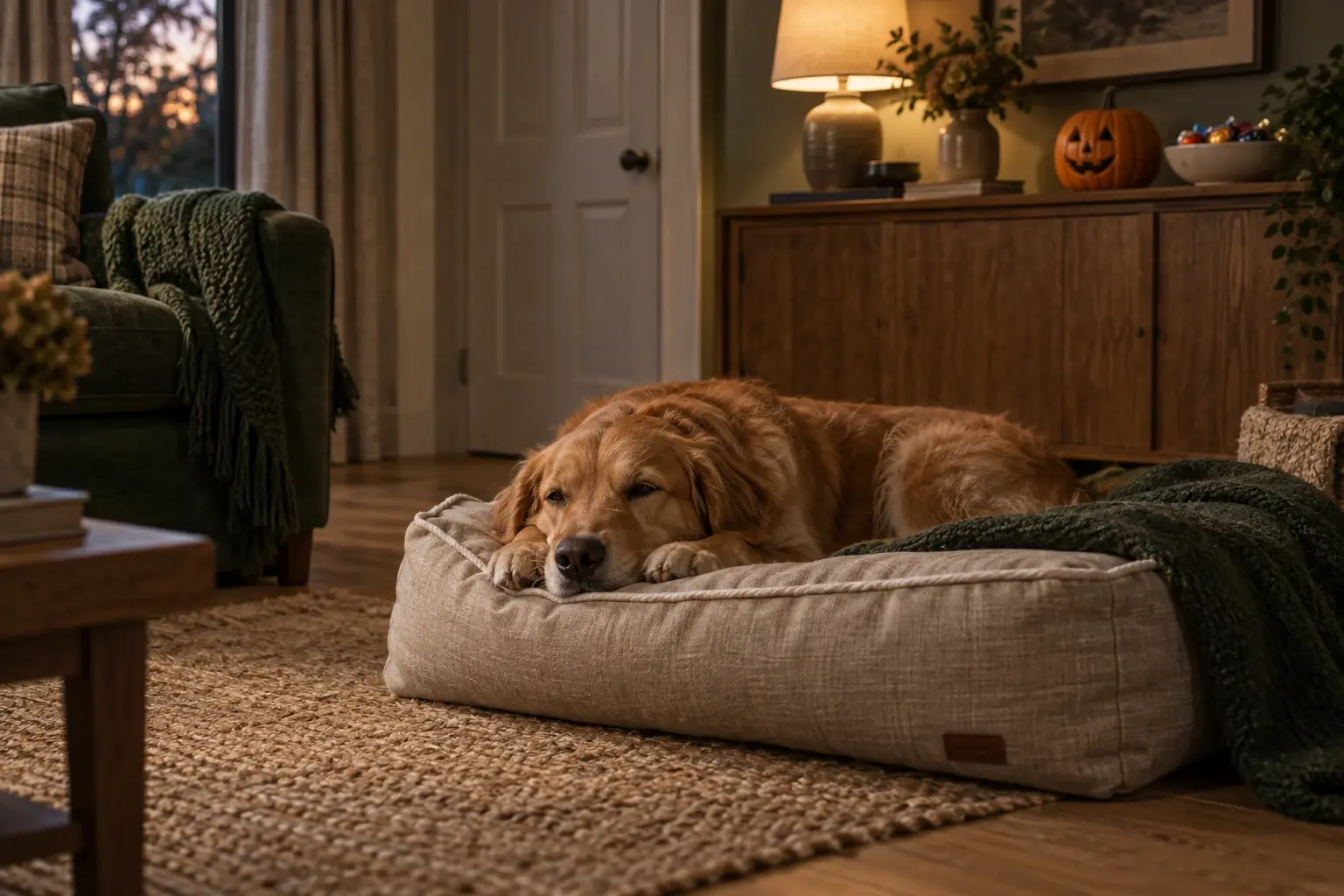
A den gives your dog somewhere to go that feels safe. PDSA recommends making it a few weeks before fireworks season so it's familiar by the time it's needed.
- Choose the spot they already pick. Behind the sofa, under a table or in a crate are all fine. Go with where your dog already goes when they're worried.
- Make it enclosed. Drape a thick blanket or duvet over the top to muffle sound, secured so it can't fall on them.
- Make it comfortable. Their bed, familiar blankets, a favourite toy and something that smells of you.
- Keep water close by. Panting makes dogs thirsty.
- Make it a good place. Drop a treat in now and then in the weeks before, so going in feels rewarding.
- Leave it open. Never shut your dog in or pull them out. If they choose to hide somewhere else instead, let them.
How to calm a dog during fireworks
On the night itself, the aim is to keep things as normal and quiet as you can.
Walk early and feed early. PDSA recommends walking while it's still light and getting home well before dark. A longer walk with plenty of sniffing helps your dog relax. Give their evening meal before the displays start, as many dogs won't eat once the bangs begin. If some walks do end up in the dark, our autumn dog walk safety guide covers how to keep your dog visible.
Shut out the flashes and the noise. Close the curtains before dark, keep the lights on and put on music or the TV at a comfortable volume.
Keep them indoors, and stay with them. Never leave your dog outside during fireworks. If they need the toilet, wait for a gap and take them out on a lead, even in your own garden, because startled dogs often bolt. Dogs Trust advises staying with your dog on firework nights, as they could panic if left alone.
Comfort them if they come to you. The old advice was to ignore a frightened dog. Dogs Trust says research shows ignoring them won't help, so if your dog comes to you for reassurance, give it calmly. If they'd rather be alone in their den, let them be.
Stay calm yourself, and never tell them off. Dogs pick up on how we feel. And if fear leads to an accident or something chewed, punishment will only make them more frightened.
Halloween falls a few days before Bonfire Night, and many dogs find the run of knocks at the door just as hard. Our guide to keeping Halloween safe for dogs includes a calm door-answering routine that works well alongside everything here.
Should I use CBD or a calming supplement for firework anxiety?
CBD comes up a lot at this time of year, so it's worth being clear. The Veterinary Medicines Directorate regulates CBD for animals as a veterinary medicine, and there are currently no CBD products authorised for pets in the UK. Giving your dog CBD without a vet's prescription is an offence. If you're interested in it, speak to your vet, who can advise on whether a prescribed product is appropriate.
Calming supplements are different. PDSA lists them among the things that can help a dog relax during fireworks, while noting that dogs respond differently and some products work better than others.
True Calm is our own calming supplement, made for exactly these moments: fireworks, travel and visitors. It's led by passionflower, alongside L-tryptophan, L-tyrosine and lemon balm, and it's non-sedating, so it supports calm behaviour without making your dog drowsy. For a known trigger like a fireworks display, give it 30 to 60 minutes beforehand. For a noisy few weeks, give it daily and allow two to three weeks to judge the full effect. We explain the science behind the lead ingredient in passionflower and the science of canine calm.
A supplement works best as one part of the plan, alongside the den and the routine, not instead of them. If your vet prescribes medication for your dog's fear, check with them before using True Calm too, as some of its ingredients aren't suitable alongside behavioural medication. If you're comparing options, our UK buyer's guide to natural dog supplements explains what to look for.
When should I speak to my vet?
- your dog is still very frightened despite the steps above
- they hurt themselves trying to hide or escape
- they can't eat, settle or sleep for hours after the fireworks stop
- they suddenly become scared of fireworks when they weren't before, which PDSA says can sometimes point to pain or illness
Longer term, your vet can refer you to an accredited behaviourist for a desensitisation programme, which gradually teaches your dog that firework sounds aren't frightening. PDSA advises starting this several months before fireworks season, so once this year is over, it's worth planning for next year.
Sources and further reading
- PDSA — Dogs and fireworks Written by vets and vet nurses. Covers the PAW Report figure, signs of fear, preparing for fireworks season, making a den and desensitisation.
- Dogs Trust — Supporting your dog during fireworks Signs of fear, staying with your dog and why comforting a frightened dog helps.
- Royal Kennel Club — Fireworks night and dogs Why fireworks frighten dogs and how to build a safe den.
- Veterinary Medicines Directorate — Can I buy CBD oil for my pet? The UK position on CBD products for animals.
This article provides general information about dog wellbeing and is not a substitute for veterinary advice. If your dog's fear of fireworks is severe, or you're unsure whether a calming supplement is right for them, contact your vet.
Frequently asked questions
How far ahead should I prepare my dog for Bonfire Night?
A few weeks is ideal. That gives your dog time to get used to a den, any background music you plan to use and a calming routine. If your dog's fear is severe, speak to your vet well before the season in case medication is needed. Full desensitisation training takes several months, so it's best started after the season ends.
Should I comfort my dog during fireworks?
Yes, if they come to you. Dogs Trust says research shows ignoring a frightened dog won't help, so calmly give them attention and reassurance. If they'd rather hide in their den, let them, and keep an eye on them without disturbing them.
Can I give my dog CBD for fireworks?
Not without a vet's prescription. The Veterinary Medicines Directorate regulates CBD for animals as a veterinary medicine, and no CBD products are currently authorised for pets in the UK. Speak to your vet if you're considering it.
Can I leave my dog alone during fireworks?
It's best not to. Dogs Trust advises staying with your dog on nights you expect fireworks, as they could panic if left alone. Keep them indoors, and take them out to the toilet on a lead during a gap in the fireworks.
Join the Frankie & Paws Family
Subscribe to our newsletter for research-led wellbeing guides and key ingredient insights, and enjoy 10% off your first purchase.